KidOK vs Common Sense Media: Complete Comparison for Parents
Compare KidOK and Common Sense Media: Features, pricing, ratings, and which parental control app is best for your family's needs.

Introduction
You are trying to decide between KidOK and Common Sense Media. Both tools promise to help families choose safer content, but each one solves a different part of the parenting decision. Which one is better for your family right now? That is the real question.
Choosing a parental media tool is harder than it looks. Parents compare ratings, reviews, pricing, app quality, and content coverage while also managing daily routines, bedtime transitions, and kids asking for answers in real time. The right app saves time and lowers stress. The wrong app creates extra work and still leaves uncertainty.
In this complete comparison, we break down KidOK and Common Sense Media side by side: features, pricing, speed, usability, and overall fit. We also cover where Common Sense Media is stronger, where KidOK is stronger, and how to choose based on your specific use case.
Transparency note: we built KidOK. We are still committed to an honest comparison because trust matters more than hype. If you are searching for common sense media alternatives or terms like kidok vs csmedia, this guide is written for you. KidOK helps parents make informed decisions about their child's mediain seconds.
What Is Common Sense Media?
Common Sense Media is a nonprofit organization founded in 2003. It is one of the best known family media resources in the United States and provides reviews for movies, TV shows, apps, games, podcasts, books, and broader digital culture topics. Its mission is to help families make informed entertainment choices.
The core experience is editorial review content. Parents search a title, read an age recommendation, then review content categories such as language, violence, and themes. This is useful for research-heavy decisions, especially when you want detailed commentary instead of only a quick label.
Common Sense Media has a large library and strong brand trust built over two decades. It also has clear limitations. New content can take time to appear, app flow is less streamlined than mobile-first tools, and there is less direct focus on overstimulation risk patterns such as rapid cuts, bright visual intensity, and high-arousal pacing.
Pricing is mixed model: free website access plus paid premium options. Official product details and current offers are available on Common Sense Media.
What Is KidOK?
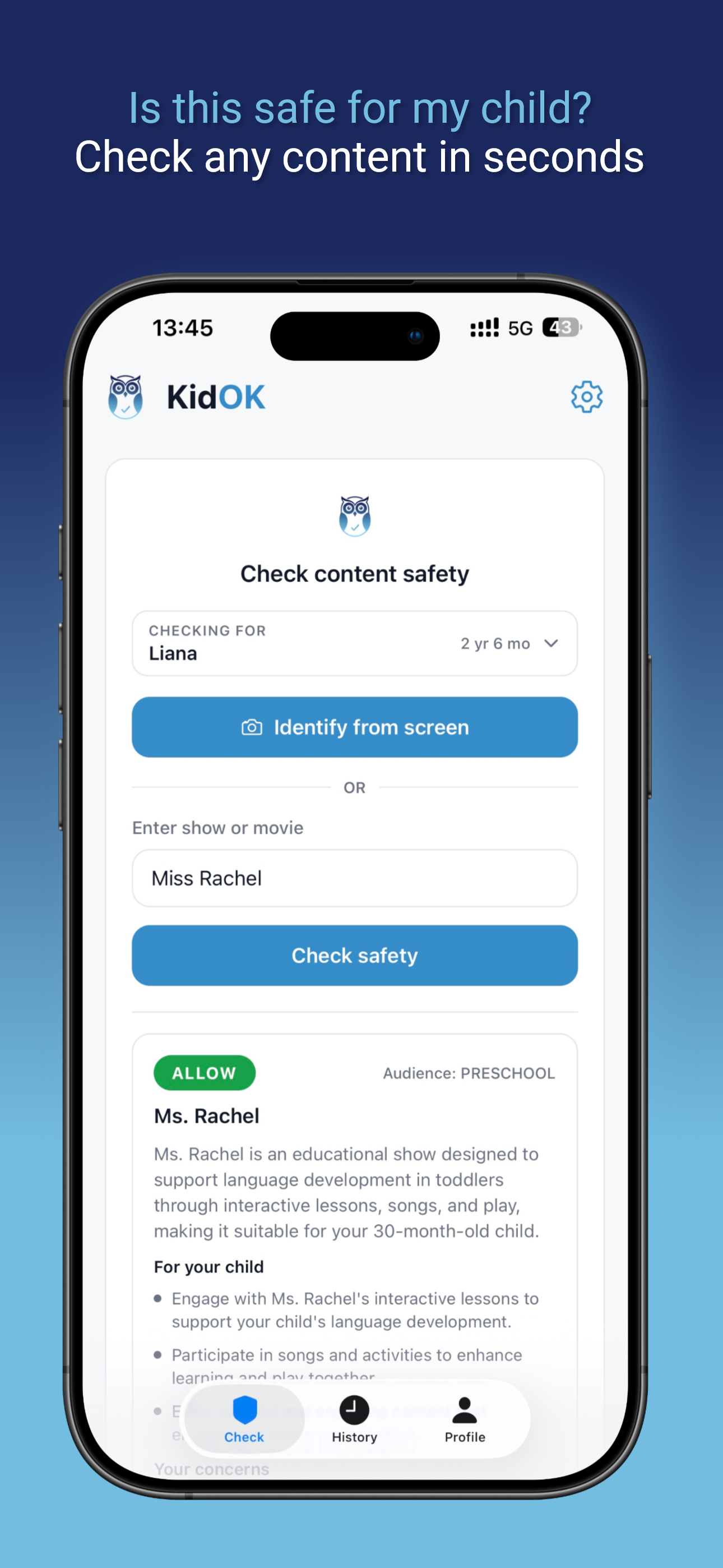
KidOK is a mobile app built for fast parental decisions about shows, movies, YouTube content, and games. The workflow is simple: search a title and get a safety summary with age guidance, key warnings, and overstimulation context in seconds.
Our mission is to help parents make clear choices without spending ten minutes on each request. We focus on practical moments: in the store, before bedtime, during travel, or when a child asks for new content and you need a decision now.
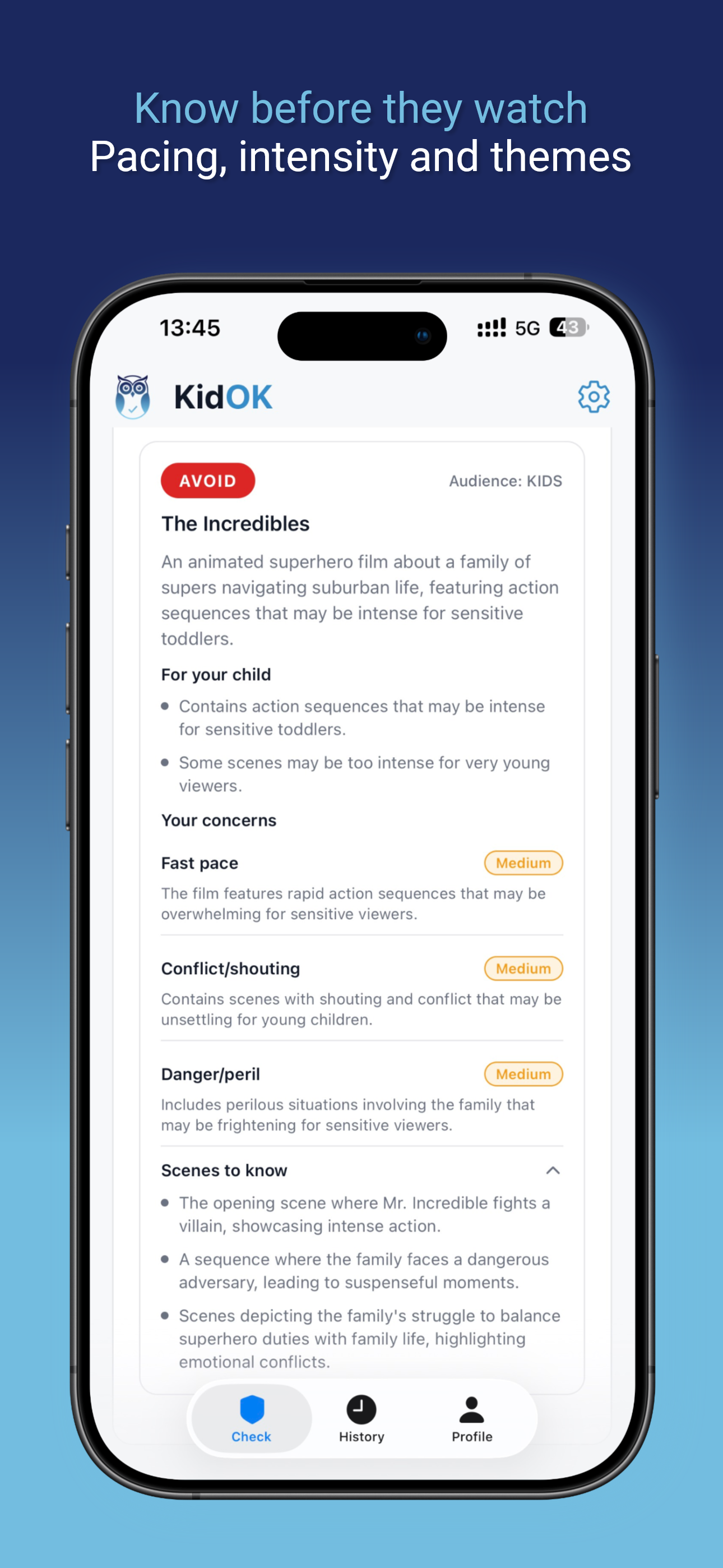
A major difference from many alternatives is overstimulation assessment. KidOK evaluates factors such as pacing, audio density, visual intensity, and sensory load so parents can spot likely dysregulation triggers early. We also emphasize YouTube coverage, where many families spend significant screen time but often have less review support.
Strengths include speed, mobile-first UX, and fast update cycles. Limits include being a newer brand with less long-form editorial commentary than nonprofit review sites.
Feature Comparison
The table below summarizes what most parents ask first. It is followed by detailed breakdowns so you can choose based on your actual priority.
| Feature | Common Sense Media | KidOK | Winner |
|---|---|---|---|
| Movie ratings | Extensive | Good | Tie |
| TV show ratings | Extensive | Good | Tie |
| App ratings | Yes | Yes | Tie |
| Game ratings | Yes | Yes | Tie |
| YouTube coverage | Limited | Strong | KidOK |
| Overstimulation risk | No dedicated metric | Yes | KidOK |
| Age recommendations | Yes | Yes | Tie |
| Content warnings | Detailed narrative | Specific quick warnings | Tie |
| Expert commentary | Strong | Limited | Common Sense Media |
| Mobile app UX | Basic | Full featured | KidOK |
| Website depth | Comprehensive | Limited | Common Sense Media |
| Search speed | Moderate | Fast | KidOK |
| Update speed | Moderate | Faster | KidOK |
| Parental control guidance | Limited | Recommendations | Tie |
| Offline support | Limited by plan | Limited options | Tie |
YouTube coverage
Common Sense Media tends to prioritize traditional media catalogs and major titles. KidOK focuses more on everyday parent search behavior, including channels and videos children actually request. If YouTube is a major part of your household media diet, KidOK usually provides better decision speed.
Overstimulation risk
Common Sense Media emphasizes age appropriateness and thematic concerns. KidOK adds overstimulation analysis so parents can evaluate sensory load, not only mature themes. For families dealing with post-screen meltdowns, this is often the deciding feature. Complete guide to video game safety and ratingsif you want the deeper gaming framework.
Expert review depth
Common Sense Media wins when parents want long editorial reviews and nuanced commentary. KidOK intentionally prioritizes fast summaries and practical flags over long narrative reviews.
Mobile-first speed
In quick decision moments, app flow matters more than review length. KidOK is optimized for fast search and instant interpretation. Common Sense Media is better for slower research sessions.
Real-world takeaway
If your top priority is deep review reading, Common Sense Media is usually stronger. If your top priority is quick safety decisions and modern platform coverage, KidOK is usually stronger.
Pricing Comparison
Pricing changes over time, but this framework reflects common parent decision logic and typical plan structures in this category.
In practical terms, pricing only matters if you use the app often enough to justify the upgrade. Families who check content once a month can stay on free plans for a long time. Families who approve games, shows, and videos daily usually recover premium cost quickly through time saved and fewer conflict-heavy decisions.
Common Sense Media pricing model
- Free: basic website access and limited app features
- Premium reference point: 5.99 monthly or 59.99 yearly
- Typical premium value: ad reduction, offline support, better filtering
KidOK pricing model
- Free: basic search, ratings, and age guidance
- Premium reference point: 4.99 monthly or 39.99 yearly
- Typical premium value: advanced filters, overstimulation detail, parental-control recommendations, priority support
| Feature | CSM Free | CSM Premium | KidOK Free | KidOK Premium |
|---|---|---|---|---|
| Basic ratings | Yes | Yes | Yes | Yes |
| Search | Yes | Yes | Yes | Yes |
| Age recommendations | Yes | Yes | Yes | Yes |
| Content warnings | Yes | Yes | Yes | Yes |
| Offline access | No | Yes | Limited | Yes |
| Ad-free | No | Yes | Yes | Yes |
| Overstimulation detail | No | No | Limited | Yes |
| Advanced filters | No | Limited | No | Yes |
| Monthly cost | Free | 5.99 | Free | 4.99 |
| Annual cost | Free | 59.99 | Free | 39.99 |
Budget takeaway: both free plans are useful. If premium value matters, KidOK is often lower cost for families prioritizing quick decisions and overstimulation context. Common Sense Media premium can be stronger for parents who prefer editorial research depth.
Cost-of-use view: if a parent checks ten titles a week, speed and clarity become part of financial value, not just subscription price. A slower workflow can still be worth it when deep commentary prevents poor choices. A faster workflow can still be worth it when quick decisions happen daily. This is why there is no universal winner on pricing. Value is tied to the way your family actually makes decisions.
Upgrade strategy that works for many families: use both free tiers for one week, track how often each app is opened, then upgrade only the app that you repeatedly rely on. This approach avoids paying for duplicate premium features you do not use.
Ease of Use and User Experience
User experience decides whether families actually use a tool consistently. A feature that exists but takes too long to access is often ignored during real parenting moments.
Common Sense Media UX summary
- Website depth is strong but can feel dense for quick checks
- App flow is functional but less optimized for instant decisions
- Learning curve is moderate due to content depth
- Best use case is pre-planned research
KidOK UX summary
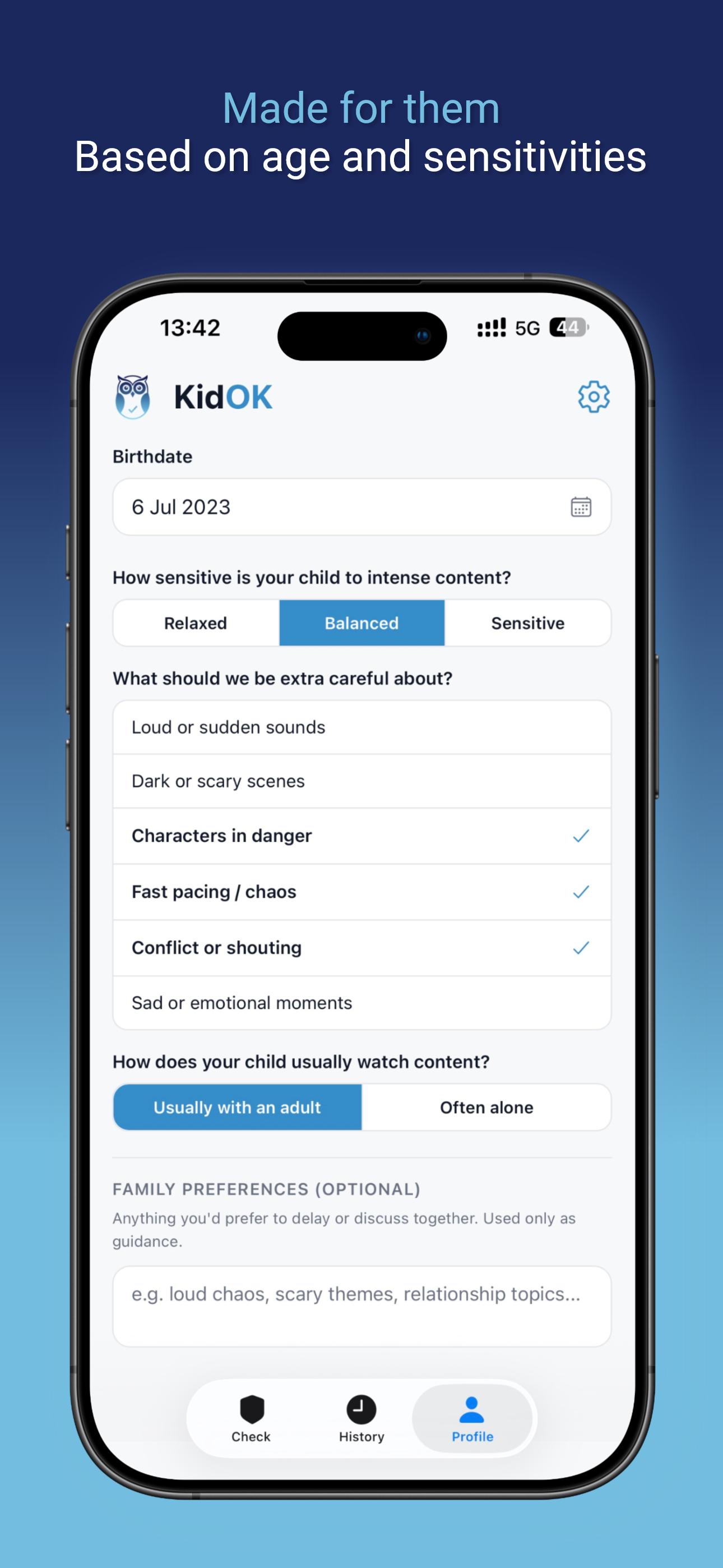
- App-first interface with short path from search to decision
- Fast result rendering and clearer at-a-glance interpretation
- Lower learning curve for busy parents
- Best use case is rapid day-to-day decision support
| Aspect | CSM | KidOK | Winner |
|---|---|---|---|
| Interface clarity | Good | Excellent | KidOK |
| Search speed | Moderate | Fast | KidOK |
| Learning curve | Moderate | Easy | KidOK |
| Mobile quality | Basic | Strong | KidOK |
| Website depth | Strong | Limited | CSM |
Scenario test: in a store with a 30-second decision window, KidOK usually wins. For weekend planning where detailed reading is preferred, Common Sense Media usually wins.
Additional real-world scenario: your child asks for a new multiplayer game ten minutes before bedtime. In that moment, most parents need a short answer with clear risk flags and a fast yes or not-yet decision. Long narrative review pages are less practical in that context. On the other hand, if you are planning a school break media plan for the week, deeper article-style reviews can provide better confidence.
Learning curve matters as well. A parent may understand either platform in one sitting, but consistency depends on whether the app feels intuitive under stress. Families with multiple caregivers often benefit from tools that produce similar decisions even when different adults are checking content.
Coverage and Content Library
Coverage quality is not only about total count. It is also about update speed and whether the content type matches where your child spends time.
Approximate category depth in this comparison model:
- Common Sense Media: about 28,000 items across movies, shows, apps, games, and books
- KidOK: about 26,000 items across movies, shows, apps, games, and strong YouTube coverage
- Common Sense Media advantage: legacy catalog depth and books
- KidOK advantage: YouTube channels, video-level checks, and faster practical updates
| Content Type | Common Sense Media | KidOK | Notes |
|---|---|---|---|
| Classic movies | Excellent | Good | CSM depth advantage |
| Recent movies | Good | Good | Comparable in many cases |
| TV shows | Excellent | Good | CSM larger catalog |
| YouTube channels | Limited | Strong | KidOK strength |
| YouTube videos | Limited | Yes | KidOK strength |
| Apps | Good | Good | Comparable |
| Games | Good | Good | Comparable |
| Books | Yes | No | CSM unique category |
Common Sense Media usually has more traditional catalog depth. KidOK usually has better practical coverage for fast-moving YouTube behavior. Both products have gaps, and neither covers everything instantly.
For many families, coverage fit matters more than raw totals. If your household mostly watches streaming series and reads books, Common Sense Media may cover a larger share of your decisions. If your household includes frequent YouTube browsing and short-form requests, KidOK often covers a higher percentage of real decisions despite slightly smaller total catalog counts.
Update speed also changes perceived coverage. A smaller but fresher catalog can outperform a larger but slower catalog for parents dealing with newly trending content requests from classmates and social media.
Unique Features
Common Sense Media unique strengths
- Long-form expert review commentary
- Book review coverage
- Large nonprofit trust footprint
- Editorial resources and parent learning content
- Community familiarity from long market presence
KidOK unique strengths
- Overstimulation risk assessment
- Broad YouTube channel and video coverage
- Faster in-the-moment search flow
- Mobile-first design optimized for short decision windows
- Rapid update orientation for newly requested content
Which unique features matter most depends on your family pattern. If your children rely heavily on YouTube and react strongly to intense pacing, Learn more about overstimulation and why it mattersbefore choosing your primary tool.
The Verdict: Which Should You Choose?
The honest answer is not one universal winner. These tools serve different intent types.
If your current pain point is uncertainty before bedtime or at purchase moments, prioritize speed and actionable summaries. If your pain point is confidence in complex content themes, prioritize long-form review depth. Parents sometimes confuse these two goals and then feel disappointed after choosing the wrong tool type. The right comparison question is not which brand is bigger. It is which workflow solves your most frequent decision type.
Choose Common Sense Media if
- You want deep expert commentary before deciding
- You value book coverage in the same platform
- You prefer a website-first research workflow
- You want established nonprofit brand history
Choose KidOK if
- You need instant ratings for daily decisions
- Your children use YouTube frequently
- Overstimulation is a key concern
- You want mobile-first flow and faster updates
- You want lower premium price reference points
Realistically, many parents benefit from both free tiers. Use Common Sense Media for longer research and KidOK for day-to-day decision speed. If you only want one app, choose based on your highest friction point: depth versus speed.
| Scenario | Best Choice | Reason |
|---|---|---|
| Quick check in a store | KidOK | Fast mobile-first lookup |
| Planned family movie night research | Common Sense Media | Deeper narrative reviews |
| YouTube safety check | KidOK | Stronger YouTube focus |
| Overstimulation concern | KidOK | Dedicated sensory risk context |
| Book recommendation support | Common Sense Media | Book category coverage |
| Budget-sensitive premium plan | KidOK | Lower reference annual price |
| Expert commentary priority | Common Sense Media | Editorial review strength |
Final recommendation: start with both free versions for one week. Notice which app you open first when a real request appears. That behavior usually reveals the correct long-term fit better than any marketing claim.
One practical checklist before committing to premium:
- How often do new content requests happen each week
- Do you mostly need fast answers or deep reading
- Is YouTube a major source of screen time in your home
- Are overstimulation symptoms a recurring concern
- Do multiple caregivers need consistent decision standards
If you answered yes to speed, YouTube, and overstimulation, KidOK is usually the stronger primary app. If you answered yes to long review research and book coverage, Common Sense Media is usually the stronger primary app. Many families still combine both approaches successfully.
FAQ
Q: Is KidOK better than Common Sense Media?
Not always. Common Sense Media is stronger for detailed research. KidOK is stronger for quick decisions, YouTube checks, and overstimulation context. Best choice depends on your use case.
Q: Can I use both apps?
Yes. Many families do. Common Sense Media for deeper reading, KidOK for rapid daily checks.
Q: Which app has more content overall?
Common Sense Media generally has broader traditional catalog depth. KidOK generally has stronger YouTube coverage and faster practical checks.
Q: Which app is faster?
KidOK is usually faster in short decision moments because it is built for mobile-first search speed and quick interpretation.
Q: Which app is cheaper?
Based on reference prices in this guide, KidOK premium is lower annual cost. Both free versions provide meaningful value.
Q: Does KidOK offer expert reviews like CSM?
Not in the same long-form editorial style. KidOK emphasizes concise ratings and practical warnings for speed.
Q: Can I check YouTube videos with CSM?
Coverage exists for some channels and topics, but it is more limited compared with KidOK in everyday parent workflow.
Q: Which app is better for overstimulation concerns?
KidOK is typically stronger because it includes dedicated sensory load analysis in the decision process.
Q: Which app is better for younger kids?
Both can help. If your priority is detailed age commentary, Common Sense Media may feel better. If your priority is quick screening and sensory risk, KidOK may feel better.
Q: Should I pay for premium on either app?
Start free, then upgrade only if you use the tool consistently. Premium is usually worth it for families making frequent daily decisions.
Quick FAQ takeaway: both tools are legitimate, but they are optimized for different parent workflows. If you frame the choice around your biggest decision friction, the best option becomes much clearer.
Conclusion
Common Sense Media remains a strong research platform with deep expert reviews and broad traditional catalog depth. KidOK remains a strong day-to-day decision app with faster search, stronger YouTube workflow, and overstimulation awareness.
There is no universal winner. The best app is the one that matches your family workflow. Try both free versions, then keep the one you reach for most often. If you use both, that is also a valid strategy.
The key outcome is active parenting in media decisions. Whether you choose KidOK, Common Sense Media, or both, the effort you are already making is what protects your child the most.
Ready to check content faster? Download on theApp StoreGet it onGoogle Play